
Study in Germany: Top Universities, Higher Education Options and Costs
Germany has one of the most attractive higher education systems in Europe: strong universities, internationally respected degrees, many English-taught programmes, and low tuition at most public institutions. For many students, the biggest surprise is not the academic quality. It is the value.
A degree from a German university can open doors in engineering, computer science, natural sciences, medicine, humanities, business, design, and the arts. The country also offers very different study formats, from research-heavy universities to practical universities of applied sciences and dual study programmes linked to employers.
This guide gives a clear overview of the main options, well-known universities, typical costs, and the practical points to check before applying.
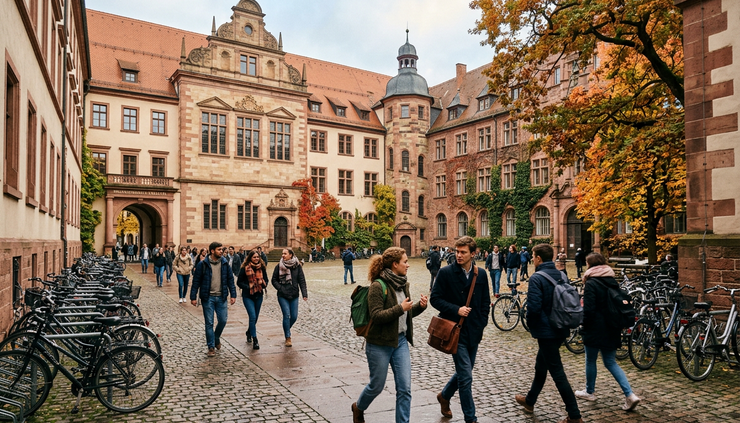
Why Germany is a popular study destination
Germany combines academic depth with a relatively affordable study model. Public universities receive strong state funding, which means many degree programmes charge little or no tuition, especially compared with the UK, the US, Canada, or Australia.
The country also has a broad university network. Students can choose large research universities in major cities, specialist technical universities, smaller universities of applied sciences, art and music academies, and dual study models that combine academic work with paid practical training.
Several factors make Germany stand out:
Strong international reputation
German degrees are widely recognised, especially in engineering, natural sciences, technology, medicine, economics, philosophy, and social sciences.
Low tuition at public universities
Most public universities do not charge standard tuition fees for many programmes, although students pay a semester contribution.
Many English-taught degrees
English-taught master’s programmes are common. English-taught bachelor’s degrees exist too, but German-language options are still more common at undergraduate level.
Good links to industry
Germany’s economy is strong in automotive, machinery, chemicals, software, renewable energy, healthcare, logistics, and manufacturing.
Central location in Europe
Students can travel easily within Germany and to neighbouring countries such as Switzerland, Austria, France, the Netherlands, Poland, and Denmark.
That said, studying in Germany still requires planning. Admission rules can be strict, housing can be competitive, and living costs vary sharply between cities.
The main types of higher education institutions in Germany
Germany does not have just one kind of university. The right choice depends on the subject, career goal, learning style, and preferred balance between theory and practice.
Universities focus on research and academic depth
Traditional universities, known as `Universitäten`, offer the broadest range of academic degrees. They are the standard route for fields such as humanities, law, medicine, natural sciences, social sciences, economics, and teacher training.
They are also the main route for students who want to continue to a doctorate. Teaching often includes lectures, seminars, independent reading, research papers, and exams.
A university is a good fit for students who want:
A research-focused education
Access to a wide range of subjects
A path towards a PhD
Strong theoretical foundations
Academic flexibility
Examples include Ludwig Maximilian University of Munich, Heidelberg University, Humboldt University of Berlin, the University of Freiburg, and the University of Göttingen.
Universities of applied sciences focus on practical skills
Universities of applied sciences, often called `Hochschulen für angewandte Wissenschaften` or `Fachhochschulen`, have a more practice-oriented approach. They are common in fields such as engineering, business, social work, health sciences, media, design, tourism, and applied computer science.
Programmes often include internships, project work, and close links to companies or public institutions. Classes can be smaller than at traditional universities, and the teaching style may feel more structured.
They are a strong option for students who want:
Practical training linked to real work
Smaller learning environments
A clearer professional focus
Applied research rather than purely academic theory
Better access to internships in some fields
A university of applied sciences can be a particularly good route for students who want to enter the workforce directly after graduation.
Technical universities are strong in engineering and science
Technical universities, known as `Technische Universitäten`, are research universities with a strong focus on engineering, natural sciences, technology, mathematics, and computer science.
They often work closely with industry and research institutes. Competition can be high, especially for popular subjects such as mechanical engineering, electrical engineering, robotics, data science, aerospace, and computer science.
Well-known examples include the Technical University of Munich, RWTH Aachen University, Karlsruhe Institute of Technology, Technical University of Berlin, and TU Dresden.
Art, music, and film schools require talent-based admission
Germany also has specialist institutions for fine arts, design, music, theatre, dance, and film. Admission usually depends on a portfolio, audition, entrance exam, or artistic work sample.
These schools can be highly selective. Applicants need to prepare early, since the admission process may involve several stages.
Subjects can include:
Fine arts
Graphic design
Product design
Music performance
Composition
Film directing
Acting
Stage design
Dance and choreography
For creative fields, the institution’s facilities, teachers, workshops, and local cultural scene can matter as much as general university rankings.
Dual study programmes combine study and work
Dual study programmes, known as `duales Studium`, combine academic study with practical training at a company or public organisation. Students may receive a salary or training allowance, depending on the model.
These programmes are popular in business administration, engineering, IT, social services, healthcare management, and public administration. They are structured and career-focused, but places can be competitive because applicants often need both university admission and a contract with an employer.
A dual study programme can suit students who want early work experience, a clear career path, and a close link between theory and practice.
Top universities in Germany to know
There is no single “best” university for every subject. Germany’s higher education system is decentralised, and many institutions are excellent in specific fields. A university that is famous for medicine may not be the best fit for design. A technical university may be ideal for engineering but less relevant for literature or music.
Still, several German universities are internationally well known and often appear in major global rankings. Rankings should not be the only factor, but they can help create a first shortlist.
University | Known for | Good to check |
Technical University of Munich | Engineering, computer science, natural sciences, management | Campus location, language of instruction, selective admission |
Ludwig Maximilian University of Munich | Medicine, humanities, law, sciences, economics | Strong research profile, high living costs in Munich |
Heidelberg University | Medicine, life sciences, humanities, research tradition | Competitive programmes, smaller city atmosphere |
Humboldt University of Berlin | Humanities, social sciences, natural sciences | Berlin location, programme structure, housing availability |
Free University of Berlin | Political science, humanities, social sciences, natural sciences | International environment, Berlin housing market |
RWTH Aachen University | Engineering, technology, applied sciences | Strong technical focus, industry links |
Karlsruhe Institute of Technology | Engineering, computer science, natural sciences | Research strength, technical workload |
University of Freiburg | Humanities, medicine, sustainability, natural sciences | Student city feel, broad subject range |
University of Tübingen | Medicine, theology, humanities, sciences | Historic setting, strong academic profile |
University of Mannheim | Business, economics, social sciences | Competitive business programmes |
When comparing universities, look beyond the name. A strong match usually comes from the details:
Does the programme match the exact subject area?
Is it taught in English, German, or both?
Are internships built into the degree?
What are the admission requirements?
How expensive is the city?
Does the university offer support for international students?
Are graduates well connected to relevant industries?
For example, Munich has world-class universities and strong job opportunities, but housing costs are high. Aachen may be excellent for engineering. Berlin offers a large international scene, but finding accommodation can take time. Smaller university towns may feel calmer and cheaper, while still offering excellent teaching.
What it costs to study in Germany
The phrase Study in Germany often appears next to the promise of low tuition, and that is mostly true for public universities. Still, the full budget includes much more than tuition. Rent, health insurance, food, transport, study materials, visa costs, and deposits can add up quickly.
Tuition fees at public universities
Most public universities in Germany do not charge general tuition fees for many bachelor’s and consecutive master’s programmes. Students usually pay a semester contribution instead. This often covers student services, administration, and sometimes local or regional public transport.
Typical semester contributions often fall somewhere around € 100 to € 400 per semester, though they vary by university and region.
There are exceptions. The state of Baden-Württemberg charges tuition fees for many non-EU international students at public universities. The fee is commonly around € 1’500 per semester, but applicants should check the current rule for their exact case. Some specialised master’s, executive, online, or continuing education programmes may also charge tuition.
Private universities charge higher fees
Private universities and business schools usually charge tuition fees. These can range from a few thousand euros per year to much higher amounts, depending on the institution and programme.
A private university may be worth considering if it offers a specific programme, smaller classes, strong career support, or a format not available at public universities. Still, the cost difference can be large, so compare outcomes carefully.
Living costs depend heavily on the city
Living costs in Germany vary by location. Munich, Frankfurt, Hamburg, Stuttgart, and parts of Berlin can be expensive. Smaller cities such as Leipzig, Jena, Göttingen, Marburg, or Greifswald may be more affordable, although housing markets change over time.
A realistic student budget often ranges from € 850 to € 1’200 per month, with Munich and some other large cities sometimes higher. Rent is usually the biggest cost.
Cost item | Typical monthly range |
Rent and utilities | € 350 to € 800 |
Food | € 200 to € 350 |
Health insurance | € 120 to € 150 |
Local transport | € 0 to € 80 |
Phone and internet | € 20 to € 50 |
Study materials and personal costs | € 100 to € 250 |
These figures are broad planning ranges, not fixed prices. Actual costs depend on the city, accommodation type, lifestyle, and whether the semester contribution includes a transport ticket.
Proof of funds and visa planning
Many non-EU students need to show proof of financial resources for a student visa or residence permit. Germany often uses a blocked account model, where students deposit a required amount before arrival.
The required amount can change, so check the latest information from the German embassy, consulate, or official immigration authority before applying. Do not rely on old blog posts for visa figures.
Students from Switzerland, the EU, and the EEA usually face different residence rules from other international applicants, but they still need to plan insurance, accommodation, and registration after arrival.

How to choose the right programme
A good university choice starts with the programme, not the ranking. The same subject can look very different from one institution to another.
A bachelor’s degree in computer science at one university may focus on mathematics and theory. Another may include more software projects. A business master’s may focus on research, finance, entrepreneurship, data analytics, or international management. Engineering degrees may differ in lab time, internships, specialisations, and industry links.
Before applying, compare these points carefully:
Admission requirements
Check whether your school-leaving certificate or previous degree is recognised. Some students need a preparatory course, known as `Studienkolleg`, before starting a bachelor’s degree.
Language requirements
German-taught programmes usually require proof of German, often through recognised tests such as TestDaF or DSH. English-taught programmes usually require English test results unless exempt.
Programme structure
Look at modules, electives, internships, exchange options, thesis requirements, and exam style.
Application route
Some applications go directly to the university. Others go through platforms such as uni-assist. Medicine, dentistry, veterinary medicine, and pharmacy may follow special rules.
City and housing
Affordable housing can be harder to find than admission in some cities. Apply for student housing early and search private options as well.
Career links
For job-focused degrees, check internships, lab access, company projects, alumni networks, and local industries.
Application deadlines vary. Many programmes start in the winter semester, which begins around October. Some also offer a summer semester start around April. International applicants should begin several months earlier, especially if documents need translations, certification, visa appointments, or recognition checks.
Practical tips before moving to Germany
Studying in another country involves more than choosing a lecture hall. A smooth start depends on paperwork, housing, language, and daily life.
Learn some German even for an English-taught degree
It is possible to study in English, especially at master’s level. Daily life is easier with German. Landlords, public offices, doctors, part-time employers, and local clubs may use German first.
Even A2 or B1 German can help with forms, flat viewings, side jobs, and friendships. For long-term career plans in Germany, stronger German skills can make a major difference.
Start the housing search early
Student residence halls are often cheaper than private rooms, but demand can be high. Shared flats, known as `WGs`, are common. In large cities, students may need to send many applications before finding a room.
Avoid sending money before you have reliable proof that the room exists and the offer is legitimate. Housing scams can target international students, especially before the semester begins.
Budget for arrival costs
The first month can cost more than later months. Deposits, temporary accommodation, public transport, winter clothing, household items, insurance payments, registration fees, and residence permit costs can come at the same time.
A safer plan includes an arrival buffer beyond the minimum monthly budget.
Check work rules before taking a job
Many students work part time. Typical options include student assistant roles, tutoring, cafés, shops, delivery work, and internships. Non-EU students must follow the work limits attached to their residence status.
A part-time job can help with costs, but it should not be the only financial plan. German degree programmes can be demanding, and exams are often concentrated at the end of the semester.
The key takeaway
Germany offers a rare mix of academic quality, respected degrees, and comparatively low tuition at public universities. The best choice is not always the most famous university. It is the programme that fits the subject, language level, budget, learning style, and career goal.
Start with the degree content, then compare the institution type, admission rules, city costs, and housing situation. Build a realistic budget, check official visa and fee information, and leave enough time for documents.
A well-planned application can turn Germany from a promising option into a practical, affordable, and rewarding place to study.


Comments