
Claims Support for a Smooth and Timely Health Insurance Process
A health insurance claim often arrives at the worst possible moment: after treatment, during recovery, or while a family is already dealing with stress. The paperwork may look simple at first, but one missing document, one unclear invoice, or one misunderstood deadline can slow everything down.
That is where good claims support makes a real difference.
A dedicated claims support team does more than receive forms. It helps explain what is needed, checks whether the claim is complete, guides the next step, and keeps the process moving toward a timely resolution. For policyholders, that support can turn a confusing task into a manageable one.
This article is for general information only. Health insurance policies, claim rules, and reimbursement decisions depend on the specific insurer, plan, treatment, and local regulations.

Why health insurance claims can feel difficult
Health insurance is built around details. A claim usually has to connect several pieces of information:
Who received care
What treatment or service was provided
When the care took place
Who provided it
What it cost
Whether the policy covers it
Whether approval was needed before treatment
When all of that information is clear, the process can move quickly. When something is missing, the claim may pause until the insurer receives more details.
Many delays do not happen because the claim is complex. They happen because a small item is incomplete or unclear. A date may be missing from an invoice. A provider’s stamp may not be readable. A prescription or referral may not be attached. A bank detail may not match the policyholder’s record.
For someone already managing treatment or recovery, these small issues can feel larger than they are. Claims support helps by spotting gaps early and explaining what to do next in plain language.
A good support process also gives people confidence. Instead of wondering whether a claim has disappeared into a system, the policyholder knows where it stands and what is expected.
What dedicated claims support should do
Claims support should not be limited to answering questions after something goes wrong. The best support starts before submission and continues until the claim is resolved.
That means guiding people through the full journey.
It explains the claim requirements clearly
A claim should not feel like a guessing game. Support teams can help clarify which documents are needed for a specific claim type.
For example, a simple outpatient invoice may need fewer documents than a hospital stay. A prescription medication claim may require a receipt and proof of prescription. A dental or specialist treatment may need additional information, depending on the policy.
Clear guidance helps avoid repeat submissions and unnecessary waiting.
It checks for missing information
A dedicated team can review whether the claim appears complete before it moves further. This is one of the most useful forms of support.
Common items to check include:
Policy or member number
Full name of the insured person
Treatment date
Diagnosis or treatment description, where required
Itemised invoice
Proof of payment, if reimbursement is requested
Referral, prescription, or prior approval, if required
Correct bank details
This check does not guarantee approval. The insurer still has to assess the claim according to the policy. But it can reduce avoidable delays.
It translates insurance language into plain terms
Insurance documents often use terms that are accurate but not always easy to understand. Words such as deductible, co-payment, exclusion, waiting period, pre-authorisation, reimbursement, and excess can affect how a claim is handled.
Good claims support explains these terms in relation to the person’s situation. That makes it easier to understand why a claim is approved, partly reimbursed, delayed, or declined.
It provides updates when the claim is under review
Waiting without information is frustrating. A support team should be able to tell people what stage the claim is in, whether anything else is needed, and what the next step will be.
Even when a claim takes longer because of medical review or missing provider details, regular updates can reduce uncertainty.

How to prepare a claim before submitting it
Preparation is one of the easiest ways to improve the claims experience. A few minutes spent organising documents can save days of back-and-forth later.
Start by reading the claim instructions for the specific policy. If the policy has an online portal, app, email submission, or postal option, check which method is preferred. Some insurers process digital claims faster, while others may require originals for certain treatments.
Then gather the core documents.
Document | Why it matters |
Itemised invoice | Shows the service, date, provider, and cost |
Proof of payment | Confirms the amount was paid, if reimbursement is requested |
Prescription or referral | Supports the medical need where required |
Prior approval confirmation | Shows that pre-authorisation was obtained, if needed |
Policy details | Links the claim to the correct insured person and plan |
Bank details | Allows payment to be made to the right account |
The invoice is often the most important document. It should be clear and itemised. A vague receipt that only shows a total amount may not be enough. If the invoice does not show the treatment date, provider details, or service description, ask the provider for a corrected version before submitting the claim.
It also helps to keep documents in date order. If the claim includes several visits, group the invoices and receipts together. Name digital files clearly, such as `invoice-physiotherapy-12-03-2026.pdf` or `receipt-pharmacy-18-03-2026.pdf`. Clear file names make review easier and reduce the chance of confusion.
Before sending the claim, check three simple things:
The name matches the policy
Use the name shown on the insurance documents. If the claim is for a dependent, make that clear.
The dates make sense
Treatment date, invoice date, and payment date should be easy to identify.
Every required attachment is included
Missing attachments are one of the most common reasons a claim stalls.
If anything is unclear, contact claims support before submission. Asking early is often faster than correcting a claim later.
What happens after a claim is submitted
Once a claim is submitted, it usually moves through a few basic stages. The exact process can vary by insurer, but the path is often similar.
First, the claim is received and registered. The insurer links it to the policy and checks that the main information is present.
Next, the claim is reviewed. This may include checking policy coverage, treatment details, limits, waiting periods, deductibles, and whether prior approval was required. If the claim is straightforward and complete, it may move quickly.
If more information is needed, the insurer or support team may contact the policyholder or, in some cases, ask for details from the healthcare provider. This is where quick responses matter. The faster the missing information is supplied, the faster the assessment can continue.
Then the claim decision is made. The outcome may be:
Approved in full
Approved in part
Put on hold pending more information
Declined according to policy terms
If payment is due, the insurer arranges reimbursement or direct settlement, depending on the policy and claim type.
A good support team helps explain the result. If a claim is partly paid, it should be clear why. For example, part of the cost may fall under a deductible, exceed a benefit limit, or relate to a service not covered under the plan.
If a claim is declined, the explanation should show the relevant policy reason. The support team can then guide the next step, such as submitting missing documentation, requesting a review, or understanding whether the decision is final under the policy terms.

How claims support helps reduce delays
Delays can happen for many reasons. Some are outside the policyholder’s control, such as a provider taking time to issue a corrected invoice. Others can be prevented with the right support.
The main value of claims support is early clarity. Instead of waiting for a rejection or delay notice, the support team can help identify possible issues before the claim enters full review.
Here are the most common areas where support can save time.
Checking if prior approval was needed
Some treatments, hospital stays, specialist procedures, or planned therapies may require approval before care begins. If this step is missed, the claim may be delayed or affected by policy rules.
Claims support can help confirm whether pre-authorisation applies and what evidence is needed.
Confirming the right submission channel
Sending documents to the wrong email address, portal, or department can add unnecessary waiting time. Support can confirm the correct route and format.
This is especially useful when a claim involves multiple documents or when the insurer has separate processes for outpatient care, hospital care, dental treatment, or medication.
Explaining benefit limits and out-of-pocket costs
Not every approved claim is paid in full. Policies may include annual limits, co-payments, deductibles, or exclusions.
Clear claims support helps set realistic expectations before the decision arrives. That does not remove the cost, but it reduces surprise and helps people plan.
Helping with follow-up documents
If the insurer asks for more information, the request may include unfamiliar wording. A support team can help identify what is actually needed.
For example, a request for “medical necessity evidence” may mean a doctor’s note, referral, treatment plan, or prescription, depending on the situation. Plain guidance helps the policyholder respond correctly the first time.
What a smooth claims experience feels like
A smooth claims experience does not mean every claim is approved or paid instantly. It means the process is clear, fair, and predictable.
The policyholder should know:
What documents to submit
Where to send them
What happens next
Whether more information is needed
Why a decision was made
When payment can be expected, if the claim is approved
This sense of order matters. Health insurance is personal. Claims often relate to illness, injury, medication, therapy, or hospital treatment. People should not have to chase unclear instructions while also managing their health.
A strong support team brings structure to that moment. It listens, explains, follows up, and helps move the claim forward.
For many people, the most valuable part of claims support is not only speed. It is the feeling that someone understands the process and can guide them through it calmly.
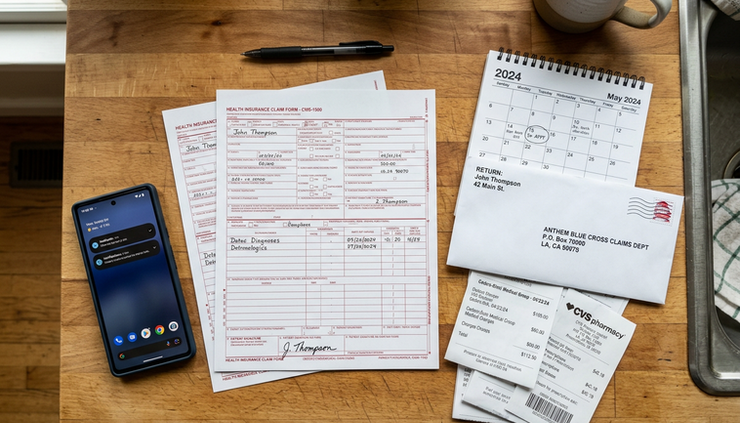
Simple habits that make future claims easier
The best time to prepare for a claim is before one is needed. A few basic habits can make the next claim much easier to handle.
Keep a folder for health documents, either physical or digital. Store invoices, prescriptions, referrals, approval letters, and insurer messages in one place. If using digital storage, scan or photograph paper documents clearly and back them up securely.
Ask providers for itemised invoices as soon as treatment is complete. If the invoice is unclear, request a corrected version while the visit is still fresh.
Save all claim-related communication. This includes emails, portal messages, approval numbers, and letters. If a question comes up later, these records can help resolve it faster.
Review policy details from time to time. Focus on the parts that affect claims, such as deductibles, exclusions, benefit limits, and pre-authorisation rules. There is no need to memorise every clause, but knowing where to look can save time.
When in doubt, contact claims support early. A short question before treatment or before submission can prevent a longer issue later.
A health insurance claim should not add confusion to an already stressful situation. With clear documents, timely communication, and a dedicated team guiding each step, the process becomes easier to manage. Claims Support for a Smooth and Timely Health Insurance Process is about more than paperwork. It is about helping people move from uncertainty to resolution with less stress and more confidence.


Comments